Unveiling the Best Shortcuts for Solving Math Problems Swiftly
In the domain name of maths, performance is crucial. Mastering faster ways can transform the way people come close to issues. From leveraging the distributive property to using quick reproduction methods, these approaches improve both speed and precision. In addition, acknowledging patterns streamlines complex calculations. As one checks out these methods, they might discover unexpected understandings that can change their mathematical experience. What are one of the most reliable methods that can be conveniently incorporated right into daily practice?
Grasping Psychological Math Techniques
Just how can one improve their calculation rate without depending on calculators? Mastering mental mathematics techniques provides a sensible option. By using methods such as damaging numbers right into smaller, manageable parts, people can streamline intricate estimations. When including two-digit numbers, rounding each number to the local ten can make mental addition much easier before changing back to the original worths.
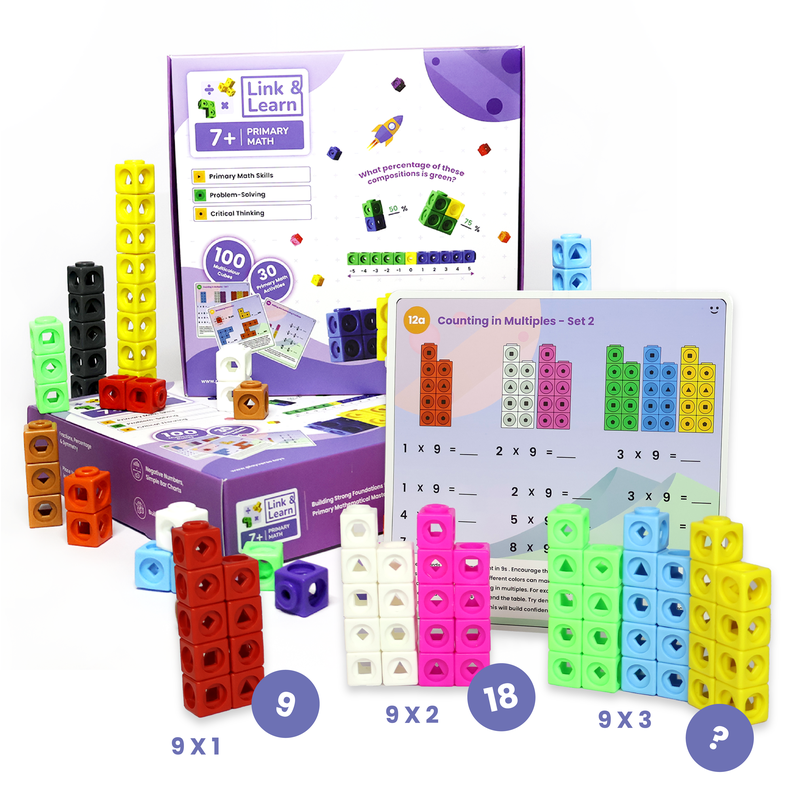
One more reliable strategy is to exercise multiplication tables extensively, allowing fast recall of products (struggles in primary math). In addition, identifying patterns in numbers can facilitate faster estimations, such as making use of the residential properties of also and weird numbers. Regular practice through problems and games can even more fine-tune these skills, making psychological mathematics much more user-friendly
Eventually, growing self-confidence in one's math capacities enables quicker decision-making and improves overall mathematical effectiveness. By incorporating these techniques, anybody can considerably enhance their estimation rate.
Using the Distributive Home
The Distributive Building is a fundamental idea in mathematics that simplifies estimations by permitting reproduction across enhancement or reduction. It is necessary for pupils to realize its application through functional instances, which can enhance their analytic skills. Additionally, identifying usual blunders can better strengthen their understanding and prevent mistakes in future calculations.
Comprehending the Distributive Building
Mastering the distributive home can substantially simplify mathematical calculations. This essential home states that when increasing a solitary term by a sum or difference, one can distribute the multiplication across each term within the parentheses. In the expression a(b + c), one can rewrite it as ab + air conditioner. This approach not just streamlines estimations but also improves understanding of how numbers connect (struggles in primary math). The distributive building is particularly useful in algebra, where it aids in streamlining expressions and solving formulas. Additionally, it lays the foundation for extra complicated principles, such as factoring and polynomial procedures. By comprehending the distributive residential property, pupils can create a strong foundation for dealing with a vast array of mathematical obstacles successfully
Practical Instances Illustrated
Why is it crucial to apply the distributive residential or commercial property in functional circumstances? The distributive residential property allows individuals to simplify intricate estimations, making problem-solving a lot more efficient. As an example, when calculating the complete expense of multiple things, one can make use of the expression 5(2 + 3) to discover the overall price of 5 products priced at $2 and $3. By distributing, the calculation comes to be 5 × 2 + 5 × 3, generating a quicker result of $25. An additional instance is in algebra, where streamlining expressions like 3(x + 4) can be accomplished via distribution, causing 3x + 12. Such applications highlight the effectiveness of this home in numerous real-world circumstances, improving both speed and accuracy in mathematical analytic.
Common Errors to Prevent
The distributive home is a powerful tool in maths, typical mistakes can lead to inaccurate results. When students forget to disperse the coefficient to each term within parentheses, one frequent error takes place. In the expression 3(x + 4), failing to use the building properly can lead to leaving out the multiplication, generating a wrong response. Another mistake involves defalcating the building by adding rather than increasing, especially when negative indicators are included. Furthermore, students may overlook to simplify the final outcome, which can odd errors made throughout distribution. Identifying and avoiding these mistakes can boost problem-solving performance and precision when using the distributive home in numerous mathematical contexts.
Quick Reproduction Shortcuts
In the domain of fast multiplication faster ways, techniques like multiplying by powers of 10 and the doubling and halving technique stand out. These approaches can substantially streamline calculations, making them extra obtainable. Comprehending these shortcuts can boost performance in mathematical problem-solving.
Increasing by Powers of 10
When increasing by powers of 10, the procedure ends up being incredibly straightforward, as the procedure primarily involves shifting the decimal factor. Multiplying a number by 10 requires relocating the decimal one these details place to the right, while increasing by 100 necessitates a change of 2 areas. This simplicity extends to larger powers, where each additional absolutely no suggests one more decimal shift. For instance, increasing 5.6 by 1,000 cause 5,600. This technique substantially enhances speed and precision, as people can swiftly visualize the outcome without complex calculations. Such effectiveness is especially useful in psychological mathematics or when time is limited, enabling quick analytical in different mathematical contexts. Grasping this technique is important for anybody intending to boost their arithmetic skills.
Doubling and Halving Technique
The Increasing and Halving Approach gives an effective technique for fast reproduction, especially when handling even numbers. This technique entails transforming a multiplication trouble into a less complex type by either doubling one of the numbers and cutting in half the other. As an example, to compute 16 × 25, one can halve 16 to get 8 and double 25 to get 50, causing 8 × 50, which amounts to 400. This method streamlines calculations, making them a lot more manageable. It is particularly useful in mental math, enabling individuals to function with issues promptly and accurately. By leveraging this strategy, students and specialists can improve other their numerical agility, thus enhancing total effectiveness in mathematical jobs
Reliable Department Strategies
Division typically presents difficulties for numerous learners, utilizing effective methods can significantly streamline the process. One effective approach is making use of compatible numbers, which involves rounding the divisor and reward to less complicated worths that are close to the original numbers. This approach makes psychological computations much more manageable. An additional method is the estimation technique, where learners can discover a rough solution before carrying out the precise department, supplying a useful criteria for precision.
The long division strategy stays a staple for dividing bigger numbers. By breaking the procedure into smaller sized, much more absorbable actions, learners can preserve clearness. The duplicated reduction technique can also be handy, especially for those that have problem with even more abstract ideas. By systematically subtracting the divisor from the returns, individuals can visualize the procedure. Overall, these approaches can boost department abilities, resulting in quicker and extra exact problem-solving capabilities.
Fast Enhancement and Reduction Techniques
How can learners boost their rate and precision on top of that and subtraction? One effective method is to make use of psychological mathematics techniques, such as breaking numbers into smaller, more convenient components. As an example, when adding 47 and 36, one can initially include 40 and 30 to obtain 70, after that add the remaining 7 and 6 to show up at 83. This approach streamlines estimations and lowers mistakes.
Another technique entails using the number line for visual learners, helping them to see the partnerships in between numbers and improve their comprehension. Additionally, experimenting devices like flashcards can reinforce quick recall of fundamental sums and differences.
Learners can benefit from familiarizing themselves with benchmark numbers, such as rounding to the closest 10, which enables for quicker estimations. By incorporating these approaches right into their technique, students can considerably improve their speed and accuracy in fundamental math procedures.
Leveraging Evaluation for Quick Calculations
Estimation works as an effective tool for enhancing calculation rate, enhancing mental mathematics methods successfully. By rounding numbers to their nearest whole values, individuals can simplify intricate estimations, making it less complicated to get here at an approximate result swiftly. As an example, when encountered with a trouble like 198 + 267, rounding to 200 + 270 returns a fast quote of 470, permitting the solver to examine the accuracy of the final solution.
Additionally, estimate is particularly helpful in circumstances including reproduction and division. By rounding variables to easier numbers, one can rapidly determine approximate items or quotients. This strategy not just conserves time however additionally aids in recognizing potential mistakes in estimations.
Recognizing Patterns and Solutions
Patterns and formulas are essential devices in mathematics that allow people to solve issues extra effectively. Recognizing these patterns enables students to determine partnerships in between numbers and principles, which can streamline complicated computations. For example, identifying the quadratic formula (ax ^ 2 + bx + c = 0) promotes fast options to different equations.
Patterns in news series, such as math or geometric developments, aid individuals predict future terms without comprehensive computations. Formulas, on the various other hand, function as shortcuts, permitting for faster analytic by encapsulating complex relationships right into workable expressions.
Frequently Asked Questions
How Can I Boost My Emphasis While Fixing Math Problems Quickly?
To improve emphasis while resolving math issues quickly, one can get rid of distractions, set specific goals, technique mindfulness strategies, take normal breaks, and keep a constant research routine to improve focus and mental clearness.
What Tools or Applications Aid with Quick Mathematics Problem-Solving?
Various tools and apps, such as Photomath, Microsoft Math Solver, and Desmos, boost fast math analytical. These resources use step-by-step options, graphing abilities, and immediate responses, making them important for professionals and trainees alike.
Exist Specific Mathematics Shortcuts for Standardized Examinations?
Yes, certain mathematics faster ways for standard examinations include methods like estimate, recognizing number homes, making use of the procedure of elimination, and understanding usual solutions. These approaches improve speed and precision, enhancing total test performance.

Exactly how Do I Exercise Math Shortcuts Efficiently?
To practice mathematics faster ways efficiently, people ought to regularly fix varied problems, use on the internet sources, and participate in timed drills. Consistency and representation on blunders enhance understanding, eventually causing improved rate and accuracy in calculations.
Can Shortcuts Be Applied to Intricate Math Troubles?
Faster ways can without a doubt be used to complex math issues, although their efficiency differs. Mastery of foundational concepts and tactical reasoning enables individuals to streamline processes, making it less complicated to take on complex estimations successfully.
By using strategies such as breaking numbers into smaller sized, manageable components, people can streamline complicated calculations. In addition, identifying patterns in numbers can help with faster estimations, such as using the properties of even and odd numbers. Estimation offers as an effective tool for boosting computation speed, complementing mental mathematics methods properly. By rounding numbers to their nearby entire values, individuals can streamline complex computations, making it much easier to arrive at an approximate outcome rapidly. Acknowledging these patterns permits students to determine relationships in between numbers and principles, which can simplify complex calculations.
Comments on “Ways to inspire confidence in students experiencing struggles in primary math”